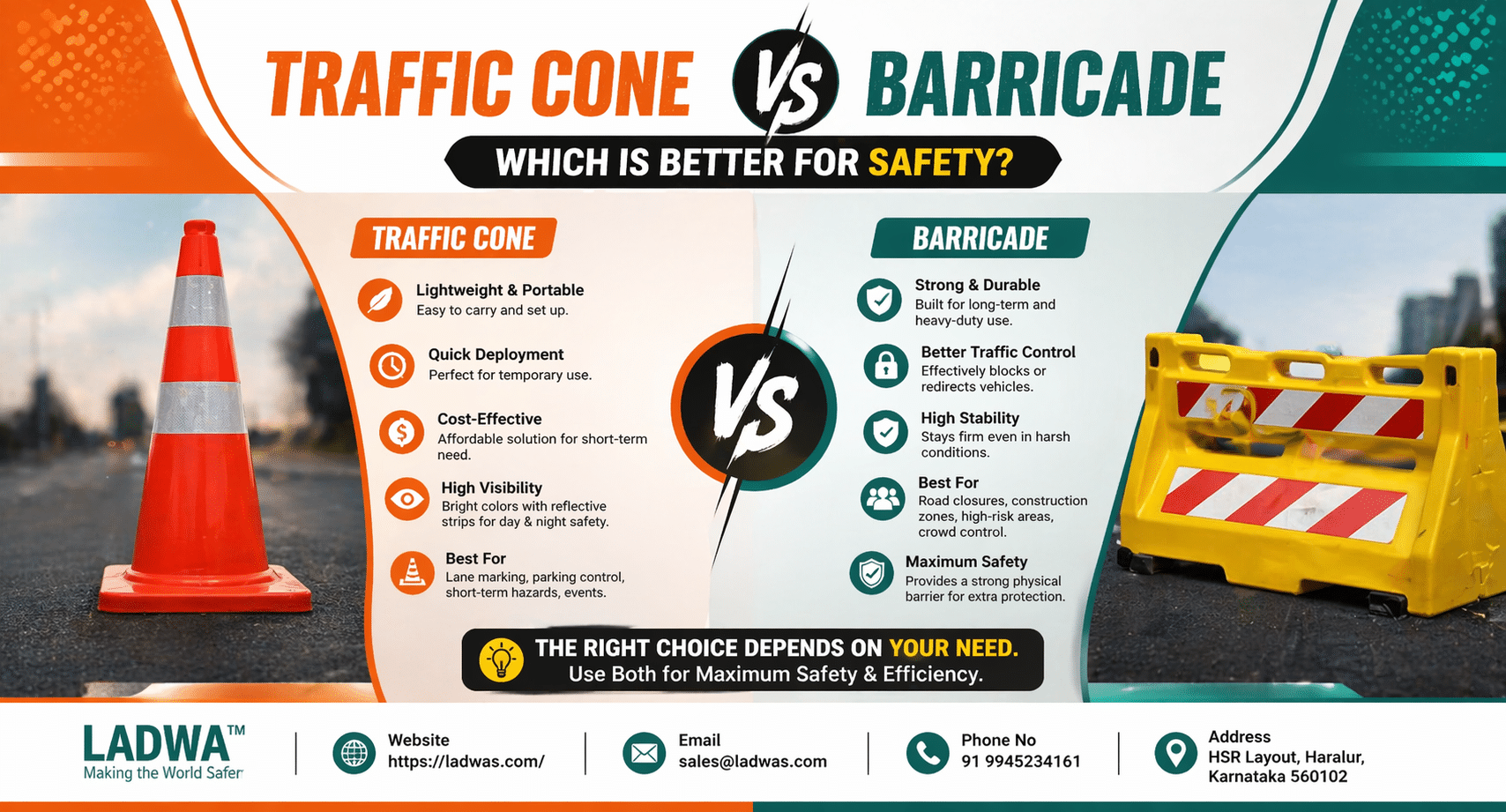
🚧 Traffic Cone vs Barricade: Which is Better for Safety?
🔍 Introduction
In road safety and traffic management, choosing the right equipment can make a significant difference in preventing accidents and ensuring smooth operations. Two of the most commonly used safety tools are traffic cones and safety barricades.
While both serve the purpose of guiding and controlling movement, they are designed for different situations. Understanding their differences will help you choose the best option for your specific safety needs.
🚦 What Are Traffic Cones?
Traffic cones are lightweight, portable safety devices typically made from plastic or rubber. They are bright in color—usually orange—with reflective strips that improve visibility during both day and night.
They are mainly used for temporary traffic control and quick hazard indication where flexibility is required.
🧱 What Are Safety Barricades?
Safety barricades are larger, more durable barriers used to block, restrict, or redirect traffic. They are available in various materials such as plastic, metal, and water-filled designs.
Barricades are ideal for situations where stronger control and long-term safety are necessary.
⚖️ Key Differences Between Traffic Cones and Barricades
Traffic cones are best suited for temporary and short-term use. They are easy to carry, quick to install, and highly flexible, making them ideal for marking lanes, guiding vehicles, or highlighting minor hazards. However, they are less stable and can be moved easily by wind or passing vehicles.
On the other hand, safety barricades provide a more solid and secure solution. They are heavier, more durable, and designed to stay in place even in challenging conditions. Barricades are used when traffic needs to be blocked or redirected in high-risk or long-term situations.
🚧 When to Use Traffic Cones
Traffic cones are the right choice when you need a fast and flexible solution. They are commonly used in:
- Temporary road work
- Parking management
- Lane marking
- Minor hazard warnings
- Event traffic control
Their biggest advantage is ease of use. They can be placed quickly and removed just as easily, making them highly efficient for short-term applications.
🧱 When to Use Safety Barricades
Safety barricades are better suited for situations that require stronger control and higher safety levels. They are commonly used in:
- Road closures
- Construction zones
- Highway diversions
- Restricted or hazardous areas
- Crowd control
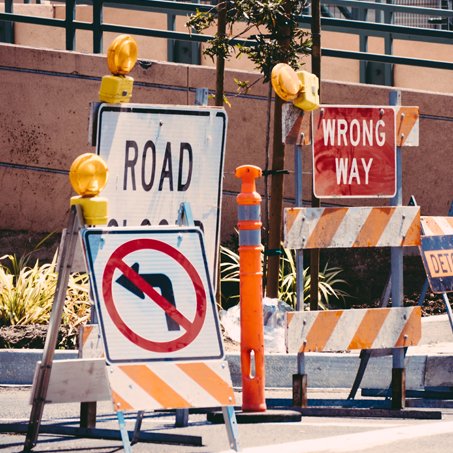
Barricades provide a physical barrier that helps prevent unauthorized access and ensures better protection for workers and the public.
🏗️ Which is Better for Highways?
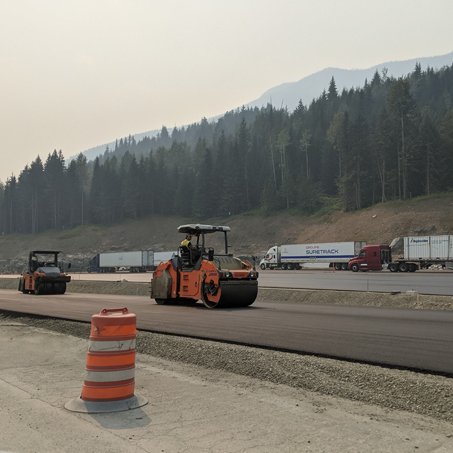
On highways, where vehicles travel at high speeds, safety becomes more critical. In such environments, barricades are generally the better choice because they offer stability and stronger protection.
Traffic cones can still be used for temporary lane marking or short-term diversions, but they are not sufficient on their own in high-risk areas.
🚧 Which is Better for Construction Sites?
Construction sites often require both flexibility and safety. Traffic cones are useful for marking temporary hazards, while barricades are essential for blocking dangerous zones and restricting access.
Using both together ensures better safety management and smoother operations.
🧠 How to Choose the Right Option
Choosing between traffic cones and barricades depends on several factors:
- Duration of use: Cones are ideal for short-term tasks, while barricades are better for long-term applications.
- Risk level: Low-risk areas can use cones, but high-risk zones require barricades.
- Location: Indoor or controlled environments can use cones, whereas highways and construction sites benefit from barricades.
- Weather conditions: Barricades perform better in windy or harsh outdoor conditions due to their stability.
💰 Cost vs Safety Consideration
Traffic cones are more affordable and suitable for temporary use, making them a cost-effective option for many projects. Barricades, although more expensive, provide better durability and higher safety levels, making them a worthwhile investment for long-term or high-risk situations.
🔗 Best Practice for Maximum Safety
The most effective approach is not choosing one over the other but using both together. Traffic cones can guide and warn road users, while barricades can block and protect critical areas.
This combination provides better visibility, improved control, and enhanced safety.
🏁 Conclusion
Traffic cones and safety barricades are both essential tools in road safety, but they serve different purposes. Traffic cones are perfect for temporary, flexible applications, while barricades offer stronger protection for long-term and high-risk situations.
By understanding their roles and using them appropriately, you can create safer environments for workers, drivers, and pedestrians while ensuring efficient traffic management.