How PPE Equipment Improves Employee Productivity and Safety
In today’s competitive industrial landscape, organizations are increasingly recognizing the importance of employee well-being and workplace efficiency. One of the most effective ways to achieve both is by investing in high-quality PPE Equipment. While many businesses view Personal Protective Equipment as a regulatory requirement, its impact extends far beyond compliance. Proper safety gear not only protects workers from hazards but also improves productivity, morale, and operational performance.
Whether in construction, manufacturing, warehousing, logistics, or infrastructure projects, PPE Equipment plays a crucial role in creating safer and more productive workplaces.
What Is PPE Equipment?
PPE Equipment (Personal Protective Equipment) refers to protective clothing, helmets, goggles, gloves, footwear, and other devices designed to safeguard workers from workplace hazards. These hazards may include falling objects, sharp materials, chemicals, excessive noise, airborne particles, electrical risks, and moving machinery.
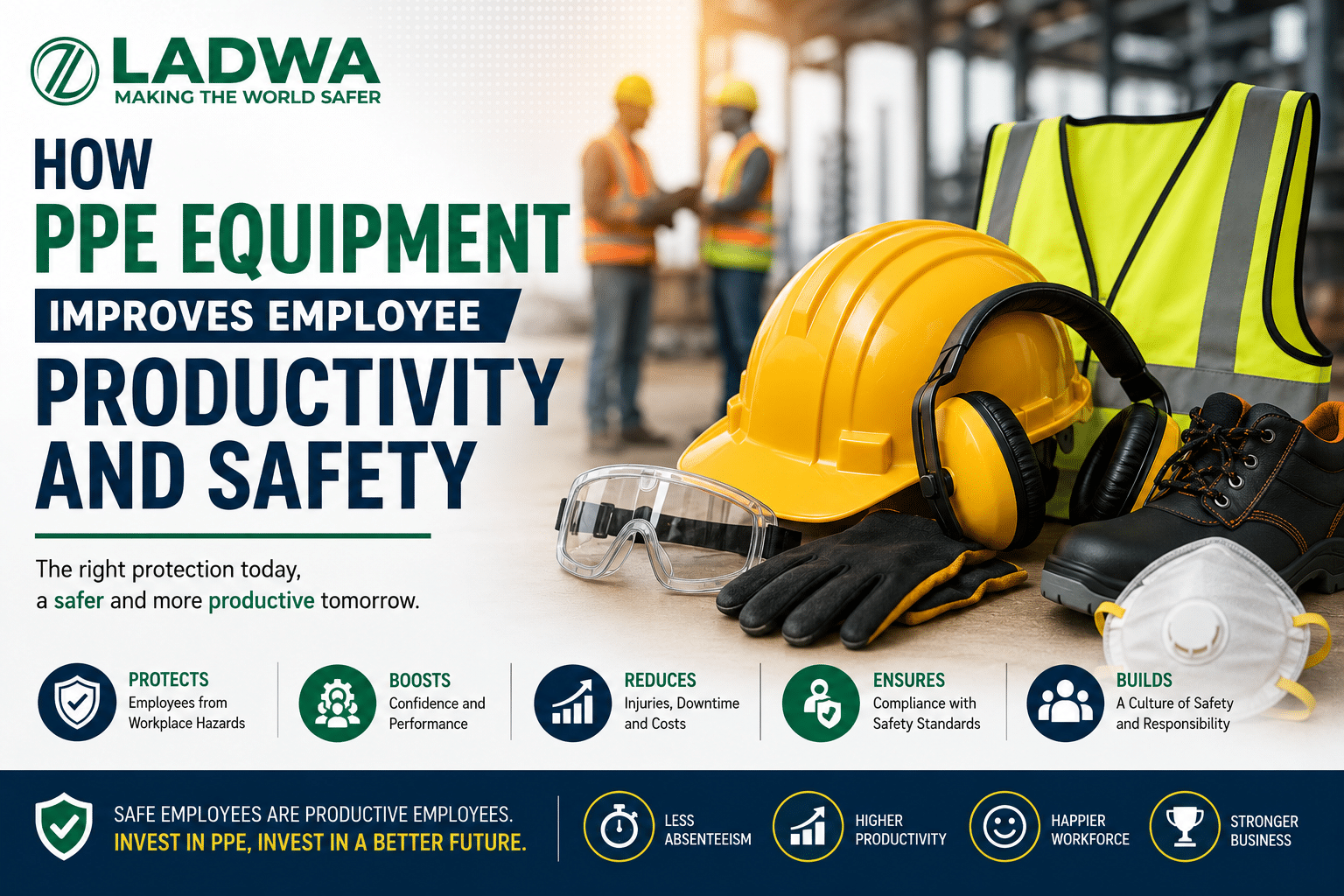
Common types of Personal Protective Equipment include:
- Safety Helmets
- Reflective Safety Jackets
- Safety Gloves
- Safety Shoes
- Protective Eyewear
- Face Shields
- Respiratory Masks
- Ear Protection Devices
- Fall Protection Harnesses
Each piece of Employee Safety Equipment is designed to reduce specific risks and improve workplace safety.
Why Personal Protective Equipment Is Essential
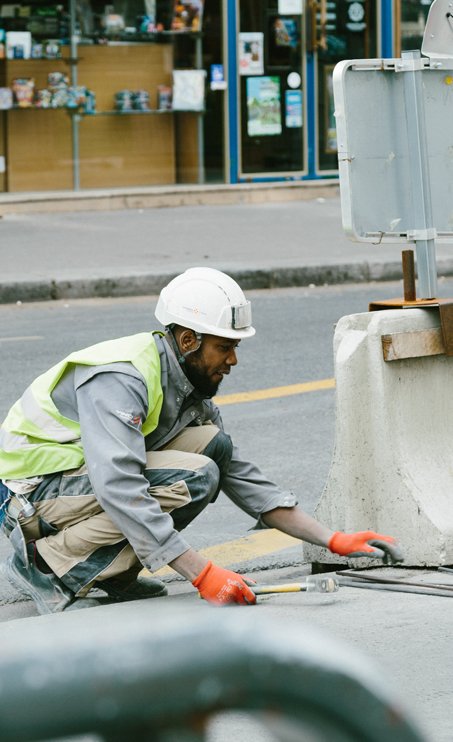
Every work environment presents unique challenges. Construction workers may face falling debris, factory employees operate near heavy machinery, and road workers are often exposed to moving traffic.
Without proper Workplace Safety PPE, employees face higher risks of:
- Head injuries
- Eye damage
- Respiratory illnesses
- Hearing loss
- Cuts and abrasions
- Slips and falls
- Chemical exposure
Providing appropriate Occupational Safety Equipment significantly reduces these risks and helps create a safer work environment.
The Link Between Safety and Productivity
Many organizations focus on productivity improvements through technology and process optimization. However, workplace safety is often one of the most overlooked productivity drivers.
When employees feel safe, they:
- Work more confidently
- Stay focused on tasks
- Experience less stress
- Take fewer sick leaves
- Maintain higher morale
This direct connection between Workplace Productivity and Safety makes PPE one of the smartest investments a business can make.
How PPE Equipment Improves Employee Productivity
1. Reduces Workplace Injuries
One of the biggest benefits of PPE Equipment is accident prevention. Workplace injuries often result in lost work hours, project delays, compensation claims, and increased operational costs.
For example:
- Safety helmets reduce head injuries.
- Safety gloves prevent hand injuries.
- Safety shoes protect against slips and heavy object impacts.
When injuries decrease, employees can work consistently without interruptions, leading to higher productivity levels.
2. Boosts Employee Confidence
Employees perform better when they know they are protected.
Providing high-quality Employee Safety Equipment gives workers peace of mind and allows them to focus fully on their responsibilities.
Confident employees are more likely to:
- Complete tasks efficiently
- Make fewer mistakes
- Meet deadlines
- Deliver higher-quality work
This increased confidence translates directly into better workplace performance.
3. Minimizes Absenteeism
Workplace accidents and occupational illnesses are major causes of employee absenteeism.
Proper Workplace Safety PPE helps prevent injuries and health issues, reducing the number of sick days and extended absences.
Benefits include:
- Consistent workforce availability
- Improved project continuity
- Reduced overtime costs
- Better resource planning
A healthier workforce naturally contributes to increased productivity.
4. Enhances Operational Efficiency
Workers equipped with the right Industrial Safety Equipment can perform tasks more effectively, even in challenging conditions.
Examples include:
- Reflective jackets improving visibility in low-light environments.
- Respirators protecting workers from harmful dust and fumes.
- Hearing protection allowing safe operation in noisy facilities.
When employees can work safely without unnecessary distractions, efficiency improves across the entire organization.
5. Supports Regulatory Compliance
Providing appropriate Personal Protective Equipment helps businesses comply with occupational health and safety regulations.
Compliance benefits include:
- Avoiding legal penalties
- Preventing costly fines
- Reducing liability risks
- Maintaining uninterrupted operations
Organizations that prioritize Occupational Safety Equipment also build stronger reputations among clients, employees, and regulatory authorities.
Essential PPE Equipment for Maximum Workplace Safety
Safety Helmets
Protect workers from falling objects, impacts, and electrical hazards.
Reflective Safety Jackets
Improve visibility for employees working near traffic, heavy equipment, and low-light conditions.
Safety Gloves
Protect hands from cuts, abrasions, chemicals, and mechanical injuries.
Safety Footwear
Reduces the risk of slips, punctures, and crush injuries.
Protective Eyewear
Shields workers from flying debris, dust, sparks, and chemical splashes.
Respiratory Protection
Prevents inhalation of harmful airborne contaminants and hazardous particles.
Fall Protection Systems
Protect workers performing tasks at heights and reduce the risk of serious accidents.
These forms of Construction Safety Gear are essential for maintaining a safe and productive workplace.
Long-Term Business Benefits of Investing in PPE
Investing in high-quality PPE Equipment offers several long-term advantages.
Reduced Costs
Fewer accidents mean lower medical expenses, compensation claims, and insurance premiums.
Better Employee Retention
Employees are more likely to remain with companies that prioritize their safety and well-being.
Improved Reputation
Organizations known for strong safety standards attract better talent and gain greater trust from clients.
Higher Productivity
Safe workers are productive workers. Effective Industrial Safety Equipment helps employees perform at their best while minimizing downtime.
Best Practices for PPE Management
To maximize the effectiveness of PPE Equipment, businesses should:
- Conduct regular risk assessments
- Provide task-specific PPE
- Train employees on proper usage
- Inspect equipment frequently
- Replace damaged PPE immediately
- Encourage a strong safety culture
Combining quality Employee Safety Equipment with proper training creates the most effective safety program.
The Future of PPE Technology
The PPE industry continues to evolve with innovative technologies designed to improve both safety and productivity.
Emerging trends include:
- Smart safety helmets
- Sensor-enabled protective gear
- Connected wearable safety devices
- Advanced respiratory protection systems
- Ergonomic PPE designs
These innovations are making Personal Protective Equipment more effective, comfortable, and user-friendly than ever before.
Conclusion
High-quality PPE Equipment is a critical investment for any organization that values employee well-being and operational success. Beyond protecting workers from hazards, Personal Protective Equipment improves confidence, reduces absenteeism, enhances efficiency, and supports compliance with safety regulations.
Organizations that prioritize Workplace Safety PPE, Industrial Safety Equipment, and Construction Safety Gear create safer environments where employees can perform at their highest potential. By strengthening the connection between Workplace Productivity and Safety, businesses can achieve long-term growth while protecting their most valuable asset—their workforce.