🏭 Warehouse Safety Equipment Checklist for Industrial Operations
🔍 Introduction
Warehouses are fast-paced environments where workers, machinery, forklifts, and inventory operate simultaneously. Without proper safety measures, warehouses can become high-risk zones for accidents, injuries, and operational disruptions.
Using the right warehouse safety equipment is essential for protecting employees, improving efficiency, and ensuring compliance with industrial safety standards. This complete checklist covers the most important safety equipment required for safe and smooth warehouse operations.
🧠 Why Warehouse Safety Equipment is Important
Warehouse environments involve risks such as falling objects, forklift collisions, slips, trips, fire hazards, and equipment-related injuries. Safety equipment helps reduce these risks while creating a safer and more productive workplace.
Proper warehouse safety measures help:
- Prevent workplace accidents
- Protect workers and inventory
- Improve operational efficiency
- Ensure compliance with safety regulations
- Reduce downtime and liability risks
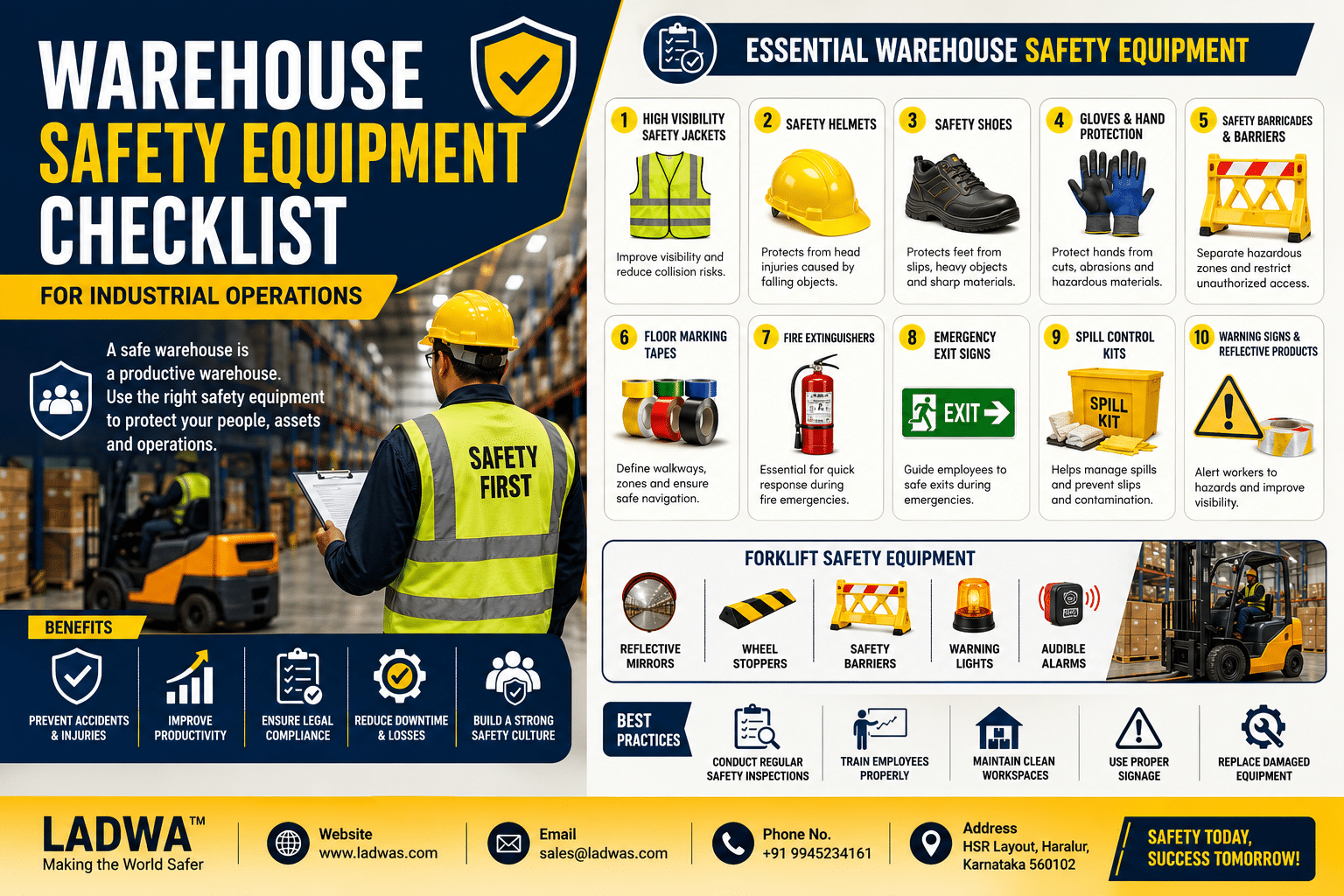
📋 Essential Warehouse Safety Equipment Checklist
1. High Visibility Safety Jackets
Workers in warehouses must remain visible around forklifts and moving machinery. Reflective safety jackets improve visibility and reduce collision risks.
Best For:
- Forklift operators
- Loading zones
- Night shifts and low-light areas
2. Safety Helmets
Safety helmets protect workers from head injuries caused by falling objects or accidental impacts.
Important Features:
- Impact resistance
- Adjustable fit
- Comfortable design for long shifts
3. Safety Shoes
Industrial safety shoes help protect workers from slips, heavy objects, and sharp materials on warehouse floors.
Key Benefits:
- Slip-resistant soles
- Toe protection
- Better grip on industrial surfaces
4. Gloves & Hand Protection
Warehouse workers handle boxes, tools, and equipment daily, making hand protection essential.
Uses:
- Prevent cuts and abrasions
- Improve grip and handling
- Protect from chemicals or sharp edges
5. Safety Barricades & Barriers
Barricades help separate hazardous zones, loading areas, and restricted sections within the warehouse.
Applications:
- Forklift routes
- Maintenance areas
- Restricted access zones
6. Floor Marking Tapes
Floor marking tapes help organize warehouse movement and improve navigation.
Used For:
- Pedestrian walkways
- Equipment zones
- Emergency exit routes
7. Fire Extinguishers
Fire safety equipment is critical in warehouses where electrical systems, machinery, and stored materials can increase fire risks.
Requirements:
- Easily accessible locations
- Regular inspection and maintenance
- Proper employee training
8. Emergency Exit Signs
Clearly visible emergency signs help workers evacuate safely during emergencies. Reflective and illuminated signs improve visibility in low-light conditions.
9. Spill Control Kits
Warehouses storing liquids or chemicals should have spill kits ready to manage accidental leaks and spills.
Includes:
- Absorbent materials
- Protective gloves
- Waste disposal bags
10. Warning Signs & Reflective Safety Products
Warning signs alert workers about hazards, restricted zones, and safety instructions. Reflective products improve visibility and awareness throughout the warehouse.
🚜 Forklift Safety Equipment
Forklifts are one of the biggest safety concerns in warehouses. Proper safety equipment helps prevent collisions and injuries.
Essential Forklift Safety Tools:
- Reflective mirrors
- Wheel stoppers
- Safety barriers
- Warning lights
- Audible alarms
These tools help improve visibility and reduce blind spots in busy warehouse areas.
💡 Best Practices for Warehouse Safety
✔ Conduct Regular Safety Inspections
Frequent inspections help identify hazards before they cause accidents.
✔ Train Employees Properly
Workers should understand safety procedures, equipment usage, and emergency protocols.
✔ Maintain Clean Workspaces
Organized and clutter-free warehouses reduce slip, trip, and fall hazards.
✔ Use Proper Signage
Clearly marked zones and instructions improve safety awareness.
✔ Replace Damaged Equipment
Broken or worn-out safety equipment should be replaced immediately.
📉 Common Warehouse Hazards
Warehouses commonly face risks such as:
- Forklift accidents
- Falling inventory
- Slippery floors
- Fire hazards
- Poor visibility
- Manual handling injuries
Using the right safety equipment significantly reduces these risks and improves overall workplace safety.
💰 Why Investing in Quality Safety Equipment Matters
Low-quality safety equipment may fail during emergencies or wear out quickly, increasing risks and operational costs. High-quality warehouse safety products provide:
- Better durability
- Improved worker protection
- Long-term cost savings
- Enhanced compliance with safety standards
Investing in reliable safety solutions creates a safer and more efficient warehouse environment.
🏁 Conclusion
Warehouse safety equipment plays a critical role in protecting workers, reducing accidents, and improving operational efficiency. From PPE and barricades to warning signs and fire safety tools, every piece of equipment contributes to a safer industrial environment.
By following a complete warehouse safety checklist and maintaining proper safety standards, businesses can create a productive workplace while ensuring the well-being of employees and visitors.