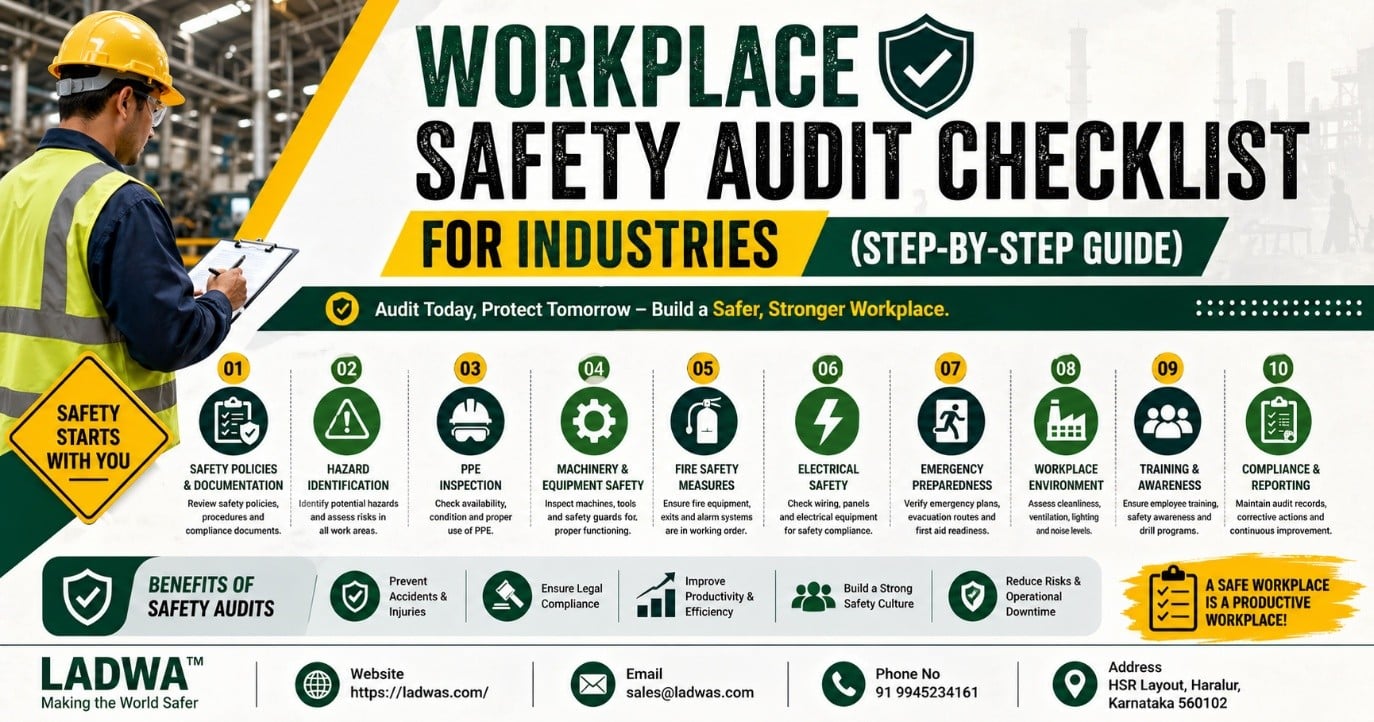
🏭 Workplace Safety Audit Checklist for Industries (Step-by-Step Guide)
🔍 Introduction
Workplace safety is not just a legal requirement—it’s a critical factor in protecting employees, reducing risks, and maintaining smooth operations. Industrial environments, in particular, involve machinery, hazardous materials, and complex processes that require strict safety measures.
A workplace safety audit helps identify potential hazards, evaluate safety practices, and ensure compliance with regulations. This step-by-step guide provides a complete safety audit checklist for industries to help you create a safer and more efficient workplace.
🧠 What is a Workplace Safety Audit?
A workplace safety audit is a systematic inspection of an organization’s safety policies, procedures, and environment. It helps identify risks, assess compliance, and improve overall safety performance.
Regular audits are essential for:
- Preventing workplace accidents
- Ensuring legal compliance
- Improving employee safety awareness
- Reducing operational risks
📋 Why Safety Audits Are Important
Conducting regular safety audits offers multiple benefits:
- Reduces workplace injuries and accidents
- Identifies hidden hazards
- Ensures compliance with safety standards
- Improves productivity and efficiency
- Builds a strong safety culture
🏗️ Step-by-Step Workplace Safety Audit Checklist
1. Safety Policies & Documentation
Start by reviewing all safety-related documents and policies.
✔ Check if safety policies are updated and accessible
✔ Verify compliance with local and international standards
✔ Ensure proper documentation of safety procedures
✔ Review incident and accident reports
2. Hazard Identification
Identify potential risks in the workplace environment.
✔ Inspect work areas for physical hazards
✔ Check for electrical, chemical, and fire risks
✔ Evaluate machinery safety
✔ Identify slip, trip, and fall hazards
3. Personal Protective Equipment (PPE)
Ensure workers are properly equipped with safety gear.
✔ Availability of PPE (helmets, gloves, shoes, jackets)
✔ Proper usage by employees
✔ Condition and maintenance of equipment
✔ Training on PPE usage
4. Machinery & Equipment Safety
Inspect all machines and tools used in operations.
✔ Proper guarding of machinery
✔ Regular maintenance and servicing
✔ Emergency stop functions working
✔ Safe operating procedures in place
5. Fire Safety Measures
Fire safety is a critical component of any workplace audit.
✔ Availability of fire extinguishers
✔ Proper labeling and accessibility
✔ Fire exit routes clearly marked
✔ Fire alarms and detection systems working
6. Electrical Safety
Check electrical systems to prevent hazards.
✔ Proper wiring and insulation
✔ No exposed wires
✔ Safe use of electrical equipment
✔ Regular inspection and maintenance
7. Emergency Preparedness
Ensure readiness for emergencies and unexpected situations.
✔ Emergency response plan in place
✔ Evacuation procedures clearly defined
✔ Emergency contact numbers displayed
✔ First aid kits available and accessible
8. Workplace Environment
Evaluate overall working conditions.
✔ Proper lighting and ventilation
✔ Clean and organized workspace
✔ Noise levels within safe limits
✔ Safe storage of materials
9. Training & Awareness
Employees should be trained and aware of safety practices.
✔ Regular safety training programs
✔ Awareness of hazards and procedures
✔ Emergency drills conducted
✔ Proper signage displayed
10. Compliance & Reporting
Ensure all safety measures meet required standards.
✔ Compliance with safety regulations
✔ Proper audit records maintained
✔ Corrective actions documented
✔ Continuous improvement plans in place
🧠 Best Practices for Effective Safety Audits
- Conduct audits regularly (monthly/quarterly)
- Involve trained safety professionals
- Use a structured checklist
- Document all findings and actions
- Follow up on improvements
💰 Importance of Regular Safety Audits
Ignoring safety audits can lead to serious consequences such as accidents, legal penalties, and operational disruptions. Regular audits help organizations stay proactive, reduce risks, and maintain a safe working environment.
Investing in safety is not just about compliance—it’s about protecting lives and improving long-term business performance.
🏁 Conclusion
A workplace safety audit is a powerful tool for identifying risks and improving safety standards in industrial environments. By following a structured checklist and conducting regular inspections, businesses can create a safer workplace for employees and ensure compliance with regulations.
Prioritizing safety not only prevents accidents but also enhances productivity, builds trust, and strengthens overall operations.